
Few things are more annoying than sitting down to game, firing up GeForce Experience, and getting hit in the face with Error Code 0x0003. The good news is that it looks worse than it actually is.
In plain English, the app just lost contact with the background NVIDIA services that keep it alive. We can knock this out together, starting with the quick two-minute checks and working our way down to a fresh, clean wipe if needed.
Quick Fixes: Try These 3 Steps First
Before digging into the weeds, let's rule out the obvious culprits that might save you ten minutes of troubleshooting.
Reboot your rig: It sounds like standard IT claptrap, but a fresh reboot clears out stuck background tasks and locks that might be keeping NVIDIA’s services from waking up.
Run it as administrator: Give the app full system permissions by right-clicking its icon and hitting "Run as administrator." A surprising amount of the time, Windows is just being stubborn about access rights.
Log out and log back in: I've run into this exact glitch myself, and simply refreshing your session can work wonders. If you can still tap into the app interface at all, sign out of your account, shut it down, reopen, and log back in to force a handshake.
Solution 1: Check and Restart NVIDIA Services (The Most Common Fix)
Nine times out of ten, this is where the real problem hides. The core background services that GeForce Experience relies on either choked during startup or Windows forgot to launch them altogether.
How to Check Your NVIDIA Services
Tap Windows Key + R to pull up the little Run prompt in the corner of your screen.
Type
services.mscand hit Enter to open the Windows Services manager.
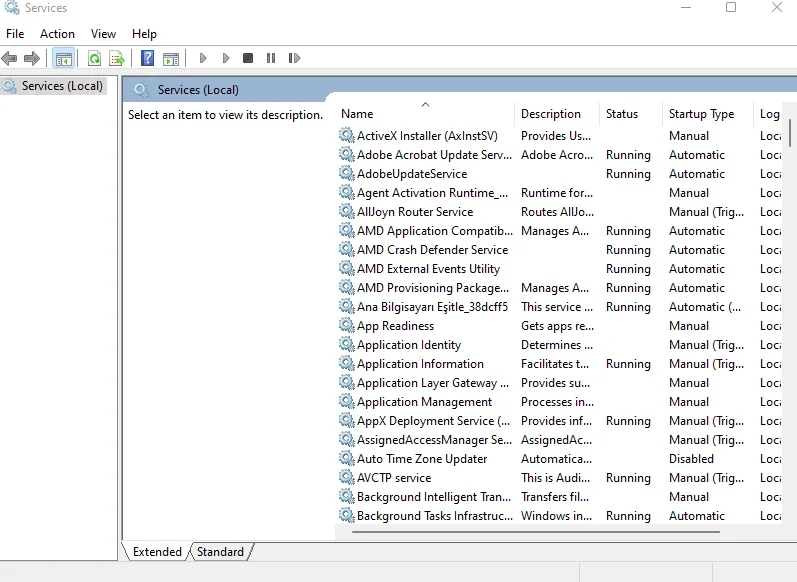
The 4 Key Services to Check
Scroll down until you hit the "N" section. You're hunting for four specific entries, and every single one needs to say "Running" under the Status column:
NVIDIA Display Container LS
NVIDIA LocalSystem Container
NVIDIA NetworkService Container
NVIDIA Telemetry Container
How to Restart and Set Services to 'Automatic'
If any of those four are sitting idle or blank, you'll need to wake them back up:
Right-click the stalled service and hit Start.
To make sure Windows doesn't leave them sleeping after the next reboot, right-click each of the four one by one and pick Properties.
Spot the "Startup type" dropdown menu right near the middle of the box.
Flip that dropdown over to Automatic.
Hit Apply to lock it in.
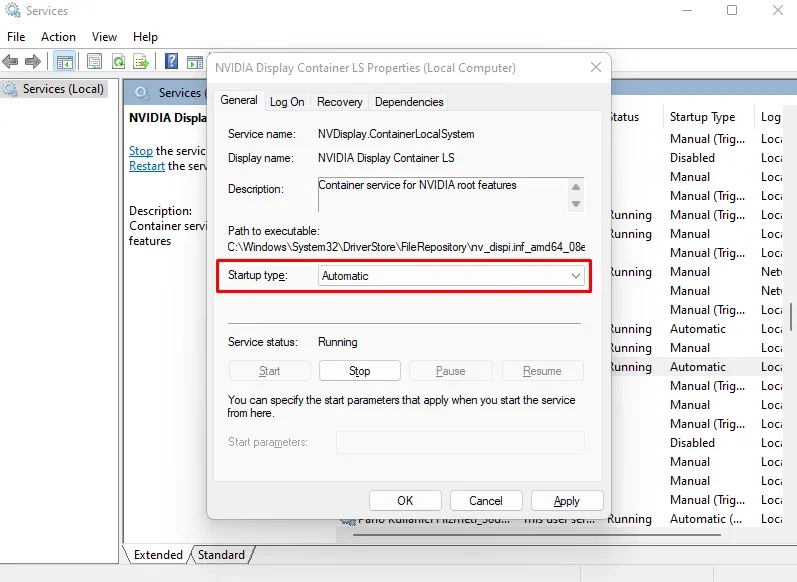
Once you've confirmed all four are running and set to kick off automatically, restart your PC and see if GeForce Experience behaves itself.
Solution 2: Fix Network Configuration and Driver Conflicts
If your services were already humming along without any trouble, the snag is usually a corrupted local network stack or broken driver components talking over each other.
Reset Your Network Configuration (Winsock Reset)
Sometimes the local network socket layer gets scrambled, which blocks NVIDIA’s local daemon from authenticating with its own web backend.
Pop open your Start Menu and search for "cmd".
Right-click "Command Prompt" and choose "Run as administrator".
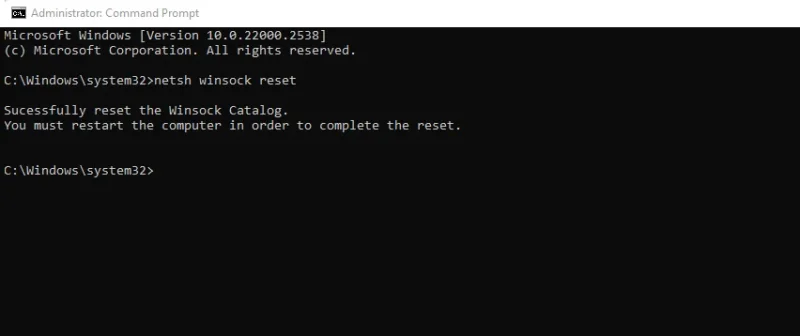
In the black terminal prompt, type
netsh winsock resetand punch Enter.Reboot your system immediately so Windows can actually rebuild the network catalog.
Reinstall or Update Your Graphics Driver
If the network reset didn't cut it, your current display driver files probably have a corrupted hook somewhere in the pipeline.
Head straight over to the official NVIDIA Drivers page.
Manually punch in your GPU details and grab the latest Game Ready installer.
Fire up the installer, but avoid Express mode - choose Custom (Advanced) instead.
On the next screen, tick the box for "Perform a clean installation."
That checkbox is crucial because it wipes out lingering profiles, bad cache files, and half-broken settings that standard updates leave behind.
Solution 3: The "Last Resort" Fix (Using DDU for a Full Clean Install)
When regular reinstalls fail, there's usually a stubborn driver remnant or broken registry entry clinging on for dear life. That's when we pull out Display Driver Uninstaller (DDU) - the community gold standard for stripping every last speck of display driver data from your machine.
Heads up: DDU is an aggressive utility, so tread carefully and follow the steps in order.
Download the fresh driver installer from NVIDIA's site first, leave it sitting on your desktop, and do not open it yet.
Grab Display Driver Uninstaller (DDU) directly from the trusted host over at guru3d.com.
Boot into Safe Mode. Don't skip this part - DDU needs Windows running on generic bare-bones drivers so it can unlock and purge protected system files.
Launch DDU, set the device type to "GPU", and pick "NVIDIA" as the vendor.
Hit the big "Clean and restart" button up top.
Let your machine reboot normally. Your display might look huge or blurry at low resolution, which is totally expected.
Double-click the installer you left on your desktop in Step 1 and let it install clean.
Specific Fixes for Windows 11 & Related Errors
For Windows 11 Users
If you're on Windows 11, this error has a habit of popping up right after a cumulative system update throws permissions out of sync. Two quick sanity checks usually solve it:
Jump into Settings > Windows Update and see if an optional quality rollup or patch is waiting. Install whatever is there and give the machine a reboot.
Check your runtime libraries. Head into Settings > Apps > Optional features and make sure your .NET Framework packages are fully enabled and up to date, as the GeForce client relies heavily on them.
What About Error Code 0x0002 or 0x0001?
If you ever run across 0x0002 or 0x0001 instead, don't worry about starting over from scratch. They are basically sibling errors sharing the exact same root cause: NVIDIA's background services dropping the ball. The steps laid out here - especially Solution 1 (verifying services) and the DDU nuclear option - will wipe those out just as effectively.