For one HEIC image on Windows 11, open it in Paint and export a JPEG; for batches, use PowerToys on Windows or Quick Actions on macOS. Command-line users can use sips on macOS or ImageMagick on either platform, which keeps private photos local and avoids uploading them to an unknown converter.
How to Convert HEIC to JPG on Windows & Mac (5 Free Methods)
HEIC files won't open in Photoshop, Lightroom, or web uploads. Convert them with built-in Windows 11 tools, Mac Quick Actions, iOS tricks, and ImageMagick.
// The short answer

Ekin Yalgın
5 min read
In this guide · 7 sections
You've transferred photos from your iPhone, tried to open them in Photoshop, Lightroom, or even a basic web uploader, and got nothing. HEIC files are invisible to most non-Apple software, which makes them a practical blocker the moment you leave the Apple ecosystem. Fixing this does not require uploading your private photos to sketchy online converters. Your operating system already has built-in tools to handle the job natively.
- Single File (Windows 11): Use the native Paint app for an instant export.
- Bulk Folders (Windows): Install PowerToys for fast background processing.
- Bulk Folders (Mac): Highlight files and use built-in Quick Actions.
- Power Users (Mac/Win): Deploy native sips or ImageMagick for the absolute fastest command-line processing.
The TL;DR Decision Tree: Which Method to Choose?
Choosing the right tool depends entirely on your operating system and the volume of your files. Sending one photo to a client requires a completely different approach than backing up a ten-year family archive. Use native apps for quick fixes, but switch to command-line or dedicated bulk tools the moment your file count exceeds twenty.
How to Convert HEIC to JPG on Windows 10 & 11
Windows traditionally struggles with Apple file formats, but recent system updates changed the landscape. You do not need bloated third-party software for basic viewing anymore.
The Native Way (Windows 11 Paint & Photos)
Windows 11 now opens HEIC files directly through the updated Paint application without requiring any extra extensions. Open your file in Paint, click File, and select Save as JPEG. One caveat: Paint strips EXIF metadata like GPS location and camera settings during export. For archival photos, use CopyTrans or PowerToys below instead. This is perfect for a single image where metadata does not matter.
Right-Click Menu Integration (CopyTrans)
If you constantly deal with Apple files, you need a system-level solution. Install CopyTrans HEIC for Windows to instantly generate image thumbnails inside File Explorer. Select up to 100 files, right-click, and choose Convert to JPEG with CopyTrans to process them natively in seconds.
Bulk Conversion for Huge Folders (PowerToys)
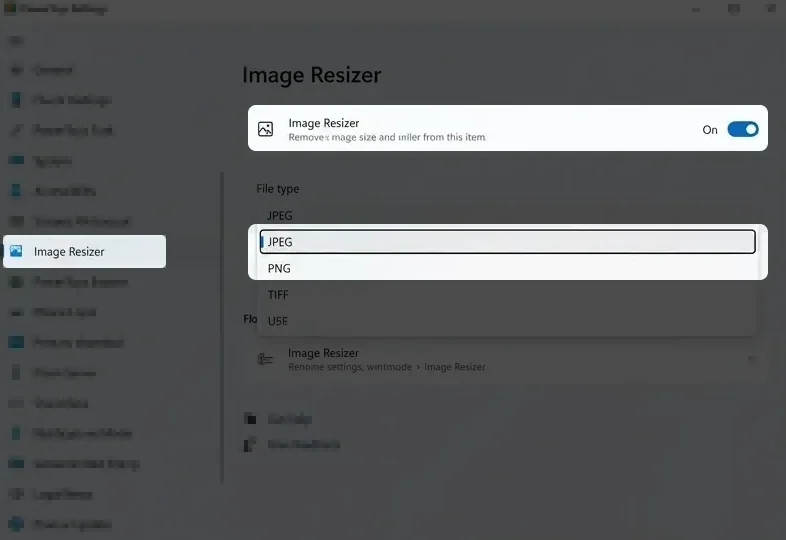
Developers and power users should skip everything else and install Microsoft PowerToys. Enable the Image Resizer module within the application settings. Select thousands of HEIC files, right-click, and let the background processor convert them without freezing your computer or consuming all your RAM.
How to Convert HEIC to JPG on Mac
Apple natively supports the High-Efficiency standard across macOS, making viewing completely seamless. Exporting them for web uploads or non-Apple clients just requires a few specific clicks.
Quick Actions & Preview (Built-in)
For one or two files, double-click to open the image in Preview, go to File, and click Export to select JPEG. For batch processing, highlight all your images, right-click, and select Quick Actions followed by Convert Image. Set your format to JPEG and leave the image size at actual size to preserve your original resolution.
Terminal Method for Power Users (sips command)
Forget downloading heavy applications for automated batch jobs. Open your Terminal application (the Mac equivalent of Windows Task Manager is covered in our Ctrl+Alt+Del on Mac guide if you need to manage processes) and navigate to your target image folder. Run *sips -s format jpeg .heic --out ./converted/ to instantly transform every file in that directory. The native Mac tool handles memory management flawlessly during massive batch operations.
iPhone & Android Workarounds
Sometimes the fastest conversion happens before the file even reaches your computer hard drive.
The iOS Files App Paste Trick
Open your Photos app, copy the selected images, and paste them into a local folder inside the Files app. iOS automatically converts them to standard JPEG files on the fly. You can then transfer this specific folder via USB or cloud storage without ever worrying about desktop compatibility issues.
Stop Future HEIC Files (Camera Settings)
Prevent the formatting problem entirely by changing your default capture settings. Go to Settings, tap Camera, and select Formats. If your iPhone is unresponsive during this process, check how to force restart any iPhone to recover quickly. Change High Efficiency to Most Compatible. Your iPhone will now shoot standard JPEG files, using roughly 50 percent more storage space per photograph.
CLI Tools for Developers (ImageMagick)
Cross-platform developers working with automated image pipelines heavily rely on ImageMagick. Install the tool via Winget on Windows or Homebrew on Mac. Run *magick mogrify -format jpg .heic directly in your directory. This exact command overwrites the format while preserving your original EXIF metadata, making it the absolute best choice for photography archives.
When NOT to Convert (And Why Keep HEIC)
Converting files is not always the smartest technical move. If you share photos exclusively via AirDrop between Apple devices, leave them as HEIC. The format retains 16-bit color depth compared to the strict 8-bit limitation of standard JPEG files. More importantly, converting to JPEG is irreversible from a color-data standpoint. If you plan to re-edit these photos later in Lightroom or Photoshop, keep the originals as HEIC and only export a JPEG copy for sharing. Uploading to iCloud also preserves this superior data structure while halving your storage costs.
Quality vs. File Size: What to Expect After Conversion
Every file conversion alters your underlying data. Moving from High-Efficiency to JPEG instantly increases your file size by about 50 percent. A typical 2.5 MB iPhone photograph will expand to nearly 4 MB on your hard drive. Keep your JPEG export quality slider between 80 and 90 percent during batch conversions. Below 75%, skin tones start showing visible banding and fine textures become muddy. Above 92%, you get negligible visual improvement but the file size approaches the original HEIC size, defeating the purpose. At 85%, a 2.5 MB HEIC photo lands around 3.8 MB as JPEG. That is your practical sweet spot.
Quick answers
Frequently asked questions
How do I bulk convert HEIC to JPG on Windows 11?
Install Microsoft PowerToys, enable the Image Resizer module, select all your HEIC files in File Explorer, right-click, and choose Resize pictures. Configure it to output JPEG format and run the batch. PowerToys handles thousands of files without freezing your system.
Can iCloud automatically convert HEIC photos to JPG?
It depends on how you download them. When you download photos from iCloud.com in a browser, Apple automatically converts them to JPEG. When you use AirDrop or a direct USB cable transfer, the original HEIC file is preserved. Go to Settings > Photos > Transfer to Mac or PC and set it to Automatic to let iOS decide based on compatibility.
Does converting HEIC to JPG reduce image quality?
Technically yes, because JPEG uses lossy compression. At a quality setting of 80-90%, the difference is invisible to the human eye. The main tradeoff is file size: a 2.5 MB HEIC photo becomes roughly 3.8 MB as JPEG at 85% quality. Avoid going below 75% for photos with skin tones, as banding becomes visible.
Why can't Windows open HEIC files without installing anything?
Windows does not bundle Apple's HEIF codec by default due to licensing. Windows 11 added partial support through the updated Paint app, but full File Explorer thumbnail support still requires the HEIF Image Extensions from the Microsoft Store, or a free third-party tool like CopyTrans HEIC.
What is the fastest way to convert thousands of HEIC photos at once?
On Windows, Microsoft PowerToys is the fastest option with a right-click menu integration. On Mac, the built-in sips command in Terminal processes an entire folder in seconds with no additional software: run sips -s format jpeg *.heic --out ./converted/ from your image directory.
Is it safe to use online converters for HEIC files?
Reputable services like CloudConvert are technically safe, but you are uploading your files to a remote server. For personal photos, family images, or anything with private metadata like GPS location, use an offline method. PowerToys, CopyTrans, or the Mac Quick Actions all process files locally without any upload.
Should I keep HEIC or convert everything to JPG?
Keep HEIC if you stay within the Apple ecosystem, share via AirDrop, or plan to re-edit the photos later. HEIC preserves 16-bit color data that JPEG permanently discards on conversion. Convert to JPG when uploading to websites, sharing with non-Apple users, or submitting to platforms that reject HEIC files.
How do I convert HEIC to JPG without losing EXIF metadata?
Avoid the Windows 11 Paint app for this, as it strips EXIF data during export. Use CopyTrans HEIC, PowerToys, or ImageMagick instead. The ImageMagick command magick mogrify -format jpg *.heic preserves all original metadata including GPS coordinates, camera settings, and capture date.
Something wrong or out of date?
Tools change fast. Tell the editor what no longer works.