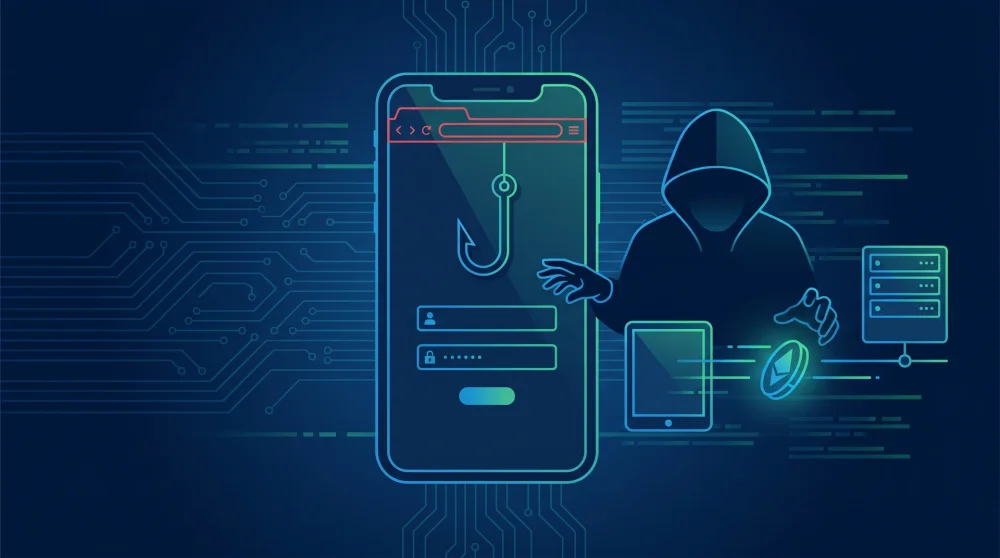

Relying on a standard SMS code or authenticator app to protect your Instagram or LinkedIn account is no longer enough when modern phishing attacks capture the actual session cookie. Attackers have shifted from simple password theft to bypassing multi-factor authentication entirely, using reverse proxies and automated fatigue tactics.
| Attack Vector | Bypasses 2FA? | Who Is at Risk |
|---|---|---|
| Reverse proxy phishing (Evilginx2) | Yes | Everyone |
| MFA fatigue (push notification bombing) | Yes | Anyone using push-based 2FA |
| Credential stuffing | No (needs 2FA bypass too) | Password re-users |
| AI impersonation DMs | No (social engineering) | Everyone in a compromised contact's network |
Fake Login Pages and Session Cookie Theft
The traditional idea of phishing involves a clumsy email with a misspelled link leading to a poorly designed webpage. Social media phishing operates on a completely different level of sophistication.
The attacker sends a direct message or leaves a comment claiming your account has a copyright violation or a pending verification badge. The link directs you to a pixel-perfect clone of the login page. You enter your username and password, the site prompts you for your 2FA code, you enter it, and the page seamlessly redirects you to the real platform.
You suspect nothing, but your account is already compromised. Modern attackers use reverse proxy tools like Evilginx2 to sit squarely in the middle of your connection.
When you interact with the fake page, the proxy forwards your inputs directly to the real social media server. The real server sends back a legitimate 2FA prompt, which the proxy passes to you. Once you provide the correct code, the real server issues a session cookie. This cookie is the digital token that keeps you logged in without re-entering your password on every page load.
The reverse proxy intercepts this authenticated session token before handing it to your browser. The attacker injects this cookie into their own browser and gains full access, completely bypassing your security settings. This is why a TOTP code alone does not protect you on a fake site.
MFA Fatigue: Weaponizing Push Notifications
Not all account takeovers rely on fake websites. Sometimes the attacker already has your password and weaponizes your own security tools against you.
Hackers purchase lists of usernames and passwords leaked from past data breaches. They find your credentials and attempt to log in. The platform blocks them and sends an approval request to your phone via push notification.
The attacker then runs an automated script that attempts to log in dozens of times per minute. Your phone screen lights up relentlessly at 3 AM with a barrage of "Approve Login?" prompts. Out of sheer frustration or the mistaken belief that the app is glitching, you tap Approve just to make the notifications stop.
The moment you authorize that single request, the attacker gains full control of the account. If you notice strange activity after such an event, check the signs of a hacked phone and act immediately.
Credential Stuffing: Exploiting Password Reuse
A compromised social media account is rarely the result of a direct brute-force attack. Major networks have strict rate limits that block rapid password guesses. Instead, attackers rely on your habits.
Roughly 65% of users recycle the same password across multiple services. If a minor forum, a fitness app, or a local e-commerce site suffers a data breach, those databases end up on the dark web. Hackers buy these combo lists for pennies.
Automated credential stuffing tools systematically test the stolen email and password combinations across all major platforms. Because the attempt uses a legitimate username and password pair, the platform often registers it as a normal user action. The only remaining barrier is your 2FA, which they will then attack using the proxy or fatigue methods above.
AI-Crafted Impersonation: The Trusted Friend Scam
Once an attacker compromises one account in a friend group, they turn it into a distribution hub. Instead of blasting a generic message to every contact, attackers now use AI to increase their success rate.
The AI analyzes the compromised user's past chat history, learning their vocabulary, sentence structure, and tone. It then generates personalized messages to everyone on their contact list. Common lures: "I can't believe someone posted this video of you" or "can you vote for me in this contest?" The link leads to a credential harvesting proxy page.
The same trust-exploitation dynamic applies across all platforms, including messaging apps where account hijacking starts with a phone number as the initial entry point.
The Social Media Defense Checklist
Standard advice like "pick a strong password" is no longer sufficient against session cookie theft or AI impersonation. These defenses actually address the specific attack mechanics above.
Hardware Keys vs. Authenticator Apps
Moving away from SMS and push notifications is the most critical upgrade you can make.
Hardware security keys (YubiKey, Google Titan) use cryptographic protocols that authenticate the domain itself. If you are on a fake Evilginx2 site, the key recognizes the domain mismatch and refuses to provide the cryptographic signature. The phishing attack fails instantly. This is the only method that defeats reverse proxy phishing at the 2FA layer.
TOTP authenticator apps (Google Authenticator, Authy) generate a time-based code every 30 seconds and eliminate push notification fatigue. However, they do not verify the domain. If you manually type a TOTP code into a fake login page, the reverse proxy still captures your session cookie.
Password Managers and Unique Passwords
A password manager does more than remember complex strings. It links your credentials directly to the official URL of the service. If you land on instagrarn-verify-security.com, the manager will not auto-fill your details. Blank fields are an immediate signal that you are on the wrong site.
By generating a unique password for every account, you also neutralize credential stuffing completely. A breach at a minor online store has zero impact on your LinkedIn security. Pair this with reliable device security to block keyloggers before they can capture your master password.
Check your active sessions in account settings periodically and terminate anything unrecognized. Enable login alerts so you are always the first to know when a new session starts. Hardware keys block the proxy attack; password managers block credential stuffing; session audits catch what slips through.